GET MORE FROM THE GAME
Dots and Boxes: strategy, examples and practical advice
Prefer a visual example? Watch the Dots and Boxes gameplay tutorial before reading the detailed strategy.
A small grid with plenty of decisions
Dots and Boxes online begins with a simple choice: connect two neighboring dots. That modest action can claim a square, give away a chain of squares, or leave your opponent with a difficult decision. The appeal comes from seeing how a small board changes over time. Early moves can seem interchangeable, while a single late edge can decide several points in a row.
DuoPlayza uses a four-by-four arrangement of dots, creating nine boxes in a three-by-three board. There are twelve possible horizontal edges and twelve vertical edges, for twenty-four lines altogether. The compact size makes it practical for a short two-player strategy game on a phone or computer. You can practice against the computer or share a private room with a friend. The visible board is shared, so neither player holds hidden information about which lines have already been drawn.
The fourth side is the important side
Each turn normally consists of drawing one unused edge. A box becomes yours when your edge completes its fourth side. The player who closes the square receives the point, regardless of who drew its first three sides. That ownership rule explains why building most of a square can actually help your opponent if the final edge is left available.
Completing a box also earns another turn. A player can therefore claim several boxes consecutively if each new edge closes another square. Occasionally one line is the missing side of two adjacent boxes, earning two points at once. Those extra turns matter as much as the immediate score. Before choosing an edge, ask whether the move merely changes one square or begins a sequence that keeps the same player in control.
A worked example of a two-box capture
Picture two neighboring squares that share a vertical boundary. Suppose every outer boundary is already drawn, but the dividing line between the squares is missing. Adding that one vertical edge completes both boxes. The player making the move claims two points and receives another turn. It does not matter whether their opponent drew most of the surrounding edges earlier.
Now compare that with adding the third side of an otherwise incomplete box. The move earns nothing immediately and may let the other player add the fourth side on their turn. The geometry looks similar because only one edge changes in either case, but the scoring consequences are entirely different. This is why counting the existing sides around each affected square is a more useful habit than clicking whichever empty segment happens to catch your eye.
Opening strategy: look for moves that preserve options
At the start of a match, most edges do not create an immediate scoring chance. Use that time to get comfortable reading neighboring boxes. An interior line can touch two boxes, while an outer boundary touches only one. Neither location is automatically best; what matters is how many sides already surround the boxes connected to that line.
A useful beginner approach is to avoid creating an easy three-sided box while safer alternatives remain. That is a practical rule of thumb, not a complete solution for every position. Sometimes all remaining moves give something away, and sometimes a sacrifice can improve the final outcome. Early in the game, however, checking for a safer unused edge helps you resist the urge to complete attractive-looking shapes without considering who gets the final side.
Count sides on both sides of a line
An interior edge belongs to the boundaries of two adjacent squares. Before drawing it, inspect both squares. You might notice that the move safely adds a second side to one box but creates a third side on the other. Looking only at the square you were thinking about can hide the giveaway immediately next to it.
This habit is especially useful on a small three-by-three board because nearly every part of the grid becomes relevant before the end. Pause long enough to count zero, one, two, or three existing sides around each affected box. You do not need to calculate the entire match on every turn. A short local check catches many avoidable errors and gradually makes the larger pattern easier to see.
Understand chains and extra-turn sequences
A chain is a run of connected opportunities where closing one box leaves another box ready to close. Because a capture grants an extra turn, the player who begins collecting that run may continue through several points before giving the move back. Seeing a chain is different from seeing a single three-sided square: you are asking how the next available capture changes the rest of the board.
Try following the sequence mentally. If one edge closes the first box, which unused edge would close the next? Does that next capture expose another? Stop when the player would have to make a move that earns no box. Even a rough count helps you compare giving away a short run with opening a much larger one. Avoid assuming that every visible chain must be taken immediately; examine the alternatives available in the actual position.
Endgame decisions when every move gives something away
Eventually the board may have no harmless edge left. At that point, repeatedly searching for a perfect safe move wastes effort. Compare the likely cost of the remaining choices instead. One move might hand over a single square, while another begins a run that covers most of the unclaimed board. Drawing the less costly line can be sensible even though it still gives your opponent a point.
Advanced Dots and Boxes strategy can involve leaving boxes deliberately to influence who opens the next run. On this small board, the exact arrangement matters, so a memorized sacrifice rule is less useful than checking what your move actually leaves. Count the boxes already secured, the points still available, and the likely extra turns. The winning move does not always create the most impressive immediate capture; it needs to lead to the stronger final total.
Practice against the computer, then test a friend
The solo opponent provides a straightforward way to learn how clicking an edge affects scoring and turn order. Use practice matches to recognize captures without rushing. When you make a mistake, identify the first line that created the opportunity rather than blaming only the final square your opponent took. That earlier decision is often the more useful place to learn.
A friend match makes the same board feel different because the other player can notice your habits and choose their own plans. Create a room, share the invite, and play from separate devices. Both people see claimed boxes and the updated score. You do not need to announce every line in a chat or keep a paper tally. After the last box, a mutual rematch creates a fresh board for another attempt.
Reading the score on a nine-box board
Every claimed box is worth one point, so there are nine points available in a completed match. Securing five boxes guarantees a majority. A single double-box move can change the balance quickly, which is why an early lead should not make you stop inspecting the remaining squares. The empty part of the board still contains the points that decide the finish.
Because nine is an odd total, a fully claimed board cannot split into equal box counts. You may still see equal scores during play, but the final nine boxes produce a higher total for one player. Keep that difference between an intermediate tie and a completed result in mind. If your opponent concedes, the match can also end before every square is filled, so that outcome should be understood separately from counting a finished grid.
More games for the same strategic mood
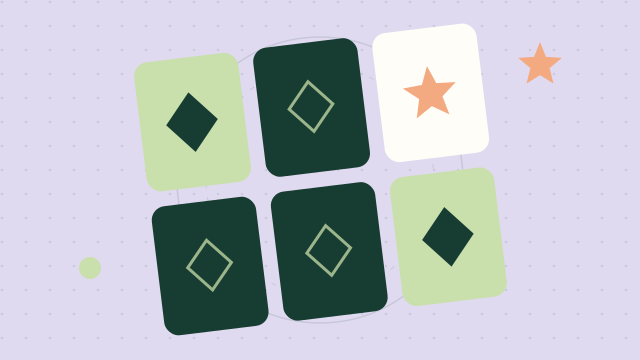
If you like watching a shared board carefully, Memory Match Duel offers another two-player challenge where the opponent’s actions provide useful information. Its hidden cards add a recall element that Dots and Boxes does not have. For a different kind of deduction, Guess the Number turns each move into a clue that narrows the available possibilities.
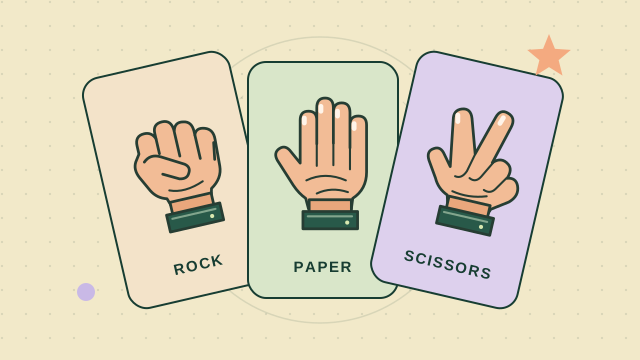
Prefer an immediate decision between longer strategy matches? Rock Paper Scissors gives you a one-round or best-of-three contest with secret choices. When you return to Dots and Boxes, bring one clear habit with you: inspect the squares touched by your edge before drawing it. That small pause makes the board more readable and gives every line a reason.